
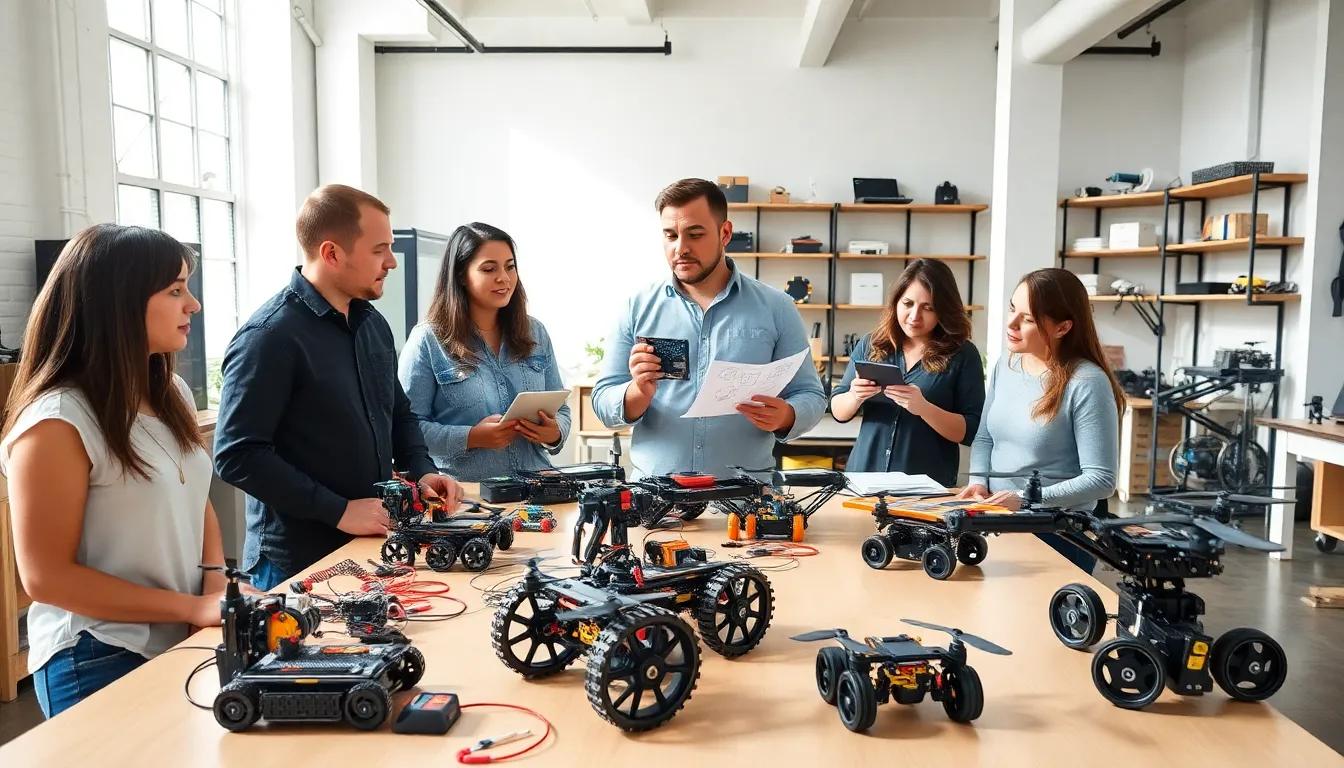

Robotics ideas spark creativity across skill levels, from weekend hobbyists to seasoned engineers. The field offers endless opportunities to build, program, and innovate. Whether someone wants to construct a simple line-following bot or develop an autonomous drone, the right project can transform curiosity into real-world skills. This guide explores robotics ideas that range from beginner-friendly builds to advanced systems. It also covers emerging trends and practical tips to help makers bring their projects to life.
Table of Contents
ToggleKey Takeaways
- Robotics ideas range from beginner-friendly projects like line-following robots to advanced builds such as autonomous drones and AI-powered vision systems.
- New builders should start with simple projects—obstacle-avoiding robots and remote-controlled cars teach core electronics and programming skills for under $50.
- Emerging trends like soft robotics, edge AI integration, and sustainable designs are shaping the future of hobbyist and professional robotics.
- Modular design and thorough documentation make troubleshooting easier and help others replicate successful robotics ideas.
- Joining communities like r/robotics or local makerspaces provides valuable feedback and accelerates your learning curve.
- Test components early, budget for mistakes, and define clear goals before starting any robotics project to avoid wasted time and resources.
Beginner-Friendly Robotics Projects
New builders should start with projects that teach core concepts without overwhelming complexity. These robotics ideas build foundational skills in electronics, programming, and mechanical design.
Line-Following Robots
A line-following robot uses infrared sensors to detect a dark line on a light surface. The robot adjusts its motors to stay on track. This project introduces sensor integration and basic control logic. Kits from companies like Arduino and Makeblock make assembly straightforward.
Obstacle-Avoiding Robots
These robots use ultrasonic sensors to detect objects in their path. They change direction automatically to avoid collisions. Builders learn how to process sensor data and write conditional code. Most obstacle-avoiding robots cost under $50 to build.
Remote-Controlled Cars
A Bluetooth or Wi-Fi-controlled car teaches wireless communication basics. Users can control movement through a smartphone app. This project helps beginners understand motor drivers, microcontrollers, and app-to-hardware connections.
Robotic Arms with Servo Motors
A simple robotic arm uses servo motors to grip and move objects. Beginners can program basic pick-and-place movements. This robotics idea introduces concepts like degrees of freedom and inverse kinematics at an entry level.
Advanced Robotics Ideas for Experienced Builders
Experienced makers can tackle robotics ideas that involve AI, computer vision, and multi-system coordination. These projects demand deeper knowledge but deliver impressive results.
Autonomous Drones
Building a drone that flies itself requires GPS modules, IMU sensors, and flight controller programming. Advanced builders can add obstacle avoidance and waypoint navigation. Open-source platforms like PX4 and ArduPilot provide the software foundation.
Humanoid Robots
Humanoid robots mimic human motion through multiple actuators and sensors. They require careful balance control and coordinated limb movement. Projects like InMoov offer open-source 3D-printable designs that builders can customize.
AI-Powered Vision Systems
Robots with computer vision can recognize faces, read text, or sort objects by color. Builders use cameras paired with machine learning libraries like OpenCV or TensorFlow. These robotics ideas push into the intersection of hardware and artificial intelligence.
Swarm Robotics
Swarm robotics involves programming multiple robots to work together without central control. Each robot follows simple rules, but the group achieves complex behaviors. This field has applications in search-and-rescue and environmental monitoring.
Emerging Trends in Robotics Development
The robotics field continues to advance rapidly. Builders who follow current trends position themselves at the cutting edge.
Soft Robotics
Soft robots use flexible materials instead of rigid components. They can squeeze through tight spaces and handle delicate objects safely. Researchers develop soft grippers for food handling and medical applications. Hobbyists now experiment with silicone molds and pneumatic systems.
Collaborative Robots (Cobots)
Cobots work alongside humans in shared spaces. They include safety features like force sensors that stop movement on contact. Small cobots have become affordable for makerspaces and small businesses.
Edge AI Integration
Edge AI runs machine learning models directly on the robot rather than in the cloud. This approach reduces latency and improves response times. Chips like NVIDIA Jetson Nano bring powerful AI processing to hobbyist robotics ideas.
Sustainable Robotics
Builders now prioritize eco-friendly materials and energy-efficient designs. Solar-powered robots and biodegradable components represent growing interest areas. These robotics ideas align with broader environmental goals.
Tips for Bringing Your Robotics Ideas to Life
Great robotics ideas need solid execution. These practical tips help builders avoid common pitfalls and complete projects successfully.
Start with Clear Goals
Define what the robot should do before buying parts. A specific goal prevents scope creep and wasted resources. Write down the robot’s intended functions and constraints.
Use Modular Design
Build systems in separate modules that connect together. Modular design makes troubleshooting easier. If one component fails, builders can swap it without rebuilding the entire robot.
Document Everything
Keep notes on wiring diagrams, code versions, and design decisions. Documentation saves time during debugging. It also helps others replicate successful robotics ideas.
Join a Community
Online forums and local makerspaces provide support and feedback. Communities like r/robotics and Hackaday share knowledge freely. Other builders can spot problems and suggest improvements.
Test Early and Often
Test each component before full assembly. Catching issues early prevents cascading failures. Iterative testing leads to more reliable robots.
Budget for Mistakes
First attempts rarely work perfectly. Set aside extra money and time for revisions. Experienced builders expect to iterate on their robotics ideas multiple times.


