
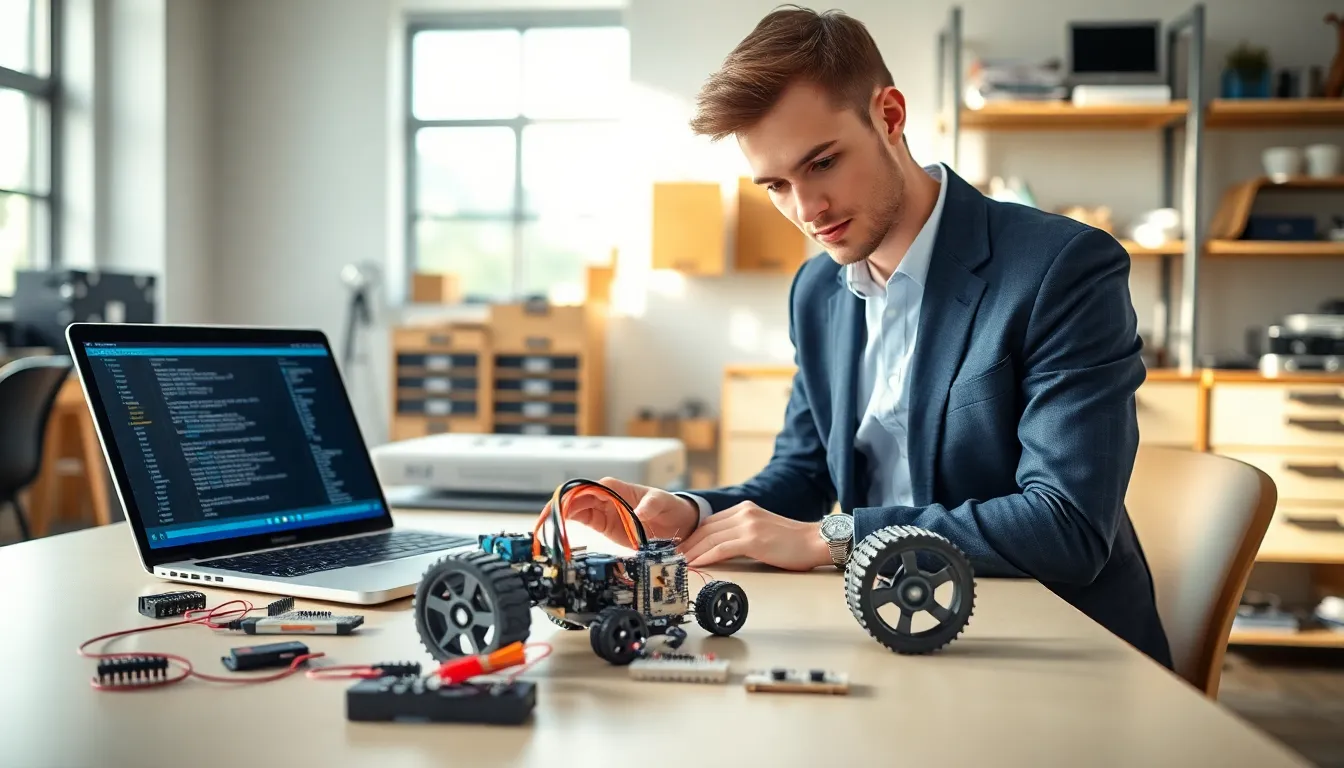

Robotics tips can transform a curious beginner into a confident builder. Whether someone dreams of creating autonomous machines or simply wants to understand how robots work, the right guidance makes all the difference. The field attracts engineers, hobbyists, students, and tinkerers alike, each bringing unique goals and skill levels.
Getting started doesn’t require an engineering degree or expensive equipment. It requires curiosity, patience, and a willingness to learn from mistakes. This guide covers practical robotics tips that help newcomers build skills efficiently. From choosing learning resources to joining supportive communities, these strategies set the foundation for long-term success in this exciting field.
Table of Contents
ToggleKey Takeaways
- Start with structured learning resources like online courses, YouTube tutorials, and official documentation to build robotics skills efficiently.
- Master Python first for its beginner-friendly syntax, then progress to C++ for real-time robot control applications.
- Choose beginner-friendly hardware like Arduino Uno and quality components from reputable suppliers to avoid frustrating debugging issues.
- Build hands-on projects progressively—from simple LED circuits to line-following robots—to cement your knowledge through practice.
- Join robotics communities, forums, and local makerspaces to accelerate learning through collaboration and real-time support.
- Document every project thoroughly to track your progress, learn from mistakes, and build a portfolio for future opportunities.
Start With the Right Learning Resources
Good learning resources separate struggling beginners from those who progress quickly. The internet offers thousands of tutorials, courses, and guides, but quality varies dramatically. Beginners should focus on structured content that builds skills systematically.
Online platforms like Coursera, edX, and Udemy host robotics courses from reputable universities and industry professionals. Many offer free options or affordable certificates. YouTube channels dedicated to robotics provide visual demonstrations that textbooks can’t match. Channels like “James Bruton” and “Simone Giertz” show projects from concept to completion.
Books remain valuable even though the digital age. “Robot Building for Beginners” by David Cook and “Learning Robotics Using Python” by Lentin Joseph give solid foundations. These resources explain concepts clearly without assuming prior knowledge.
One often-overlooked tip: documentation matters. Arduino, Raspberry Pi, and other platforms maintain extensive documentation libraries. Reading official docs teaches proper techniques and prevents bad habits. It’s tempting to skip straight to building, but time spent learning pays dividends later.
Beginners should also follow robotics news sites and blogs. IEEE Spectrum Robotics, Hackaday, and RobotShop Blog cover industry developments and showcase inspiring projects. Staying informed helps learners understand where the field is heading and what skills will matter most.
Master Fundamental Programming Concepts
Programming skills form the backbone of robotics work. Robots don’t move, sense, or respond without code telling them what to do. Beginners don’t need to become expert programmers immediately, but they should understand core concepts.
Python serves as an excellent starting language for robotics. Its readable syntax helps beginners focus on logic rather than complicated formatting rules. Python also integrates well with popular robotics frameworks like ROS (Robot Operating System). Many robotics tips emphasize Python because it shortens the learning curve significantly.
C and C++ power most industrial robots and embedded systems. These languages run faster and use less memory than Python, critical factors for real-time robot control. Learning C++ after Python gives beginners a natural progression path.
Key programming concepts every robotics enthusiast should master include:
- Variables and data types
- Loops and conditional statements
- Functions and modular code design
- Basic algorithms and problem-solving approaches
- Sensor input processing and motor output control
Practice matters more than theory. Writing code daily, even for 30 minutes, builds programming intuition faster than watching tutorials passively. Debugging broken code teaches lessons that no course can replicate.
Version control through Git helps learners track changes and recover from mistakes. It’s a professional skill that pays off immediately. Free platforms like GitHub let beginners store projects and collaborate with others.
Choose Beginner-Friendly Hardware
Hardware choices can make or break a beginner’s robotics journey. Starting with overly complex components leads to frustration. Starting with the right gear builds confidence and practical skills.
Arduino boards remain the gold standard for robotics beginners. They’re affordable, well-documented, and supported by massive communities. The Arduino Uno handles most starter projects easily. Sensors, motors, and other components connect without specialized knowledge.
Raspberry Pi offers more computing power for projects requiring cameras, networking, or complex processing. It runs Linux and supports full programming environments. Many learners use Arduino for motor control while Raspberry Pi handles higher-level functions.
Robot kits provide complete packages for first builds. Options like LEGO Mindstorms, VEX Robotics, and Makeblock mBot include everything needed to create functional robots. Kits reduce the guesswork around compatible parts and proper assembly.
Essential components for a beginner’s toolkit include:
- Microcontroller board (Arduino Uno or similar)
- DC motors and servo motors
- Motor driver boards
- Basic sensors (ultrasonic, infrared, light)
- Breadboards and jumper wires
- Battery packs or power supplies
Buying quality components saves money long-term. Cheap sensors and motors fail unpredictably, creating debugging nightmares. Reputable suppliers like Adafruit, SparkFun, and Pololu sell reliable parts with excellent documentation.
These robotics tips about hardware apply whether someone wants to build a simple line-following robot or eventually construct something more ambitious.
Focus on Hands-On Projects
Theory without practice produces weak skills. Hands-on projects cement knowledge and reveal gaps in understanding. Every successful robotics enthusiast builds things, lots of things.
Start with simple projects that teach fundamental concepts. A blinking LED seems trivial but introduces microcontroller basics, circuit connections, and code upload procedures. A line-following robot adds sensors and motor control. An obstacle-avoiding robot incorporates decision-making logic.
Project complexity should increase gradually. Jumping straight to advanced builds creates frustration and wasted components. Each project should introduce one or two new concepts while reinforcing previous lessons.
Document every project thoroughly. Photos, videos, code comments, and written notes help learners remember what worked and what didn’t. Documentation also creates portfolio pieces for future opportunities. Employers and collaborators want to see completed work.
Failure teaches better than success. When a project doesn’t work, the debugging process builds problem-solving skills. Experienced robotics builders expect things to break. They budget time for troubleshooting and view setbacks as learning opportunities.
Replicating existing projects before attempting original designs gives beginners proven blueprints to follow. Sites like Instructables and Hackster.io host thousands of documented robotics projects with parts lists and step-by-step instructions. These resources provide excellent starting points.
Eventually, learners should tackle original projects based on personal interests. Building something unique, whether a robot arm, autonomous vehicle, or creative art installation, deepens skills and fuels motivation.
Join Robotics Communities and Forums
Learning alone is harder than learning with others. Robotics communities provide support, feedback, and inspiration that accelerate skill development. Active participation in these groups multiplies the value of individual effort.
Online forums like Reddit’s r/robotics, Arduino Forum, and Raspberry Pi Forums host active discussions. Members answer questions, share projects, and troubleshoot problems together. Searching forum archives often reveals solutions to common issues faster than starting from scratch.
Discord servers and Slack channels offer real-time communication with fellow enthusiasts. Many robotics YouTube creators and educators maintain community spaces where learners interact directly.
Local robotics clubs and makerspaces provide hands-on collaboration opportunities. Working alongside experienced builders accelerates learning dramatically. Makerspaces often have tools and equipment that individuals can’t afford alone, 3D printers, laser cutters, and specialized testing equipment.
Robotics competitions motivate learners and provide concrete goals. Events like FIRST Robotics, RoboCup, and local maker fairs give participants deadlines, judging criteria, and audiences. Competition pressure pushes people to finish projects rather than abandoning them.
Contributing back to communities strengthens skills further. Answering questions forces learners to articulate concepts clearly. Sharing project documentation helps others while building personal reputation. The robotics community rewards generosity with connections and opportunities.
These robotics tips about community involvement apply regardless of skill level. Even experts continue learning from peers and staying connected to new developments in the field.


