
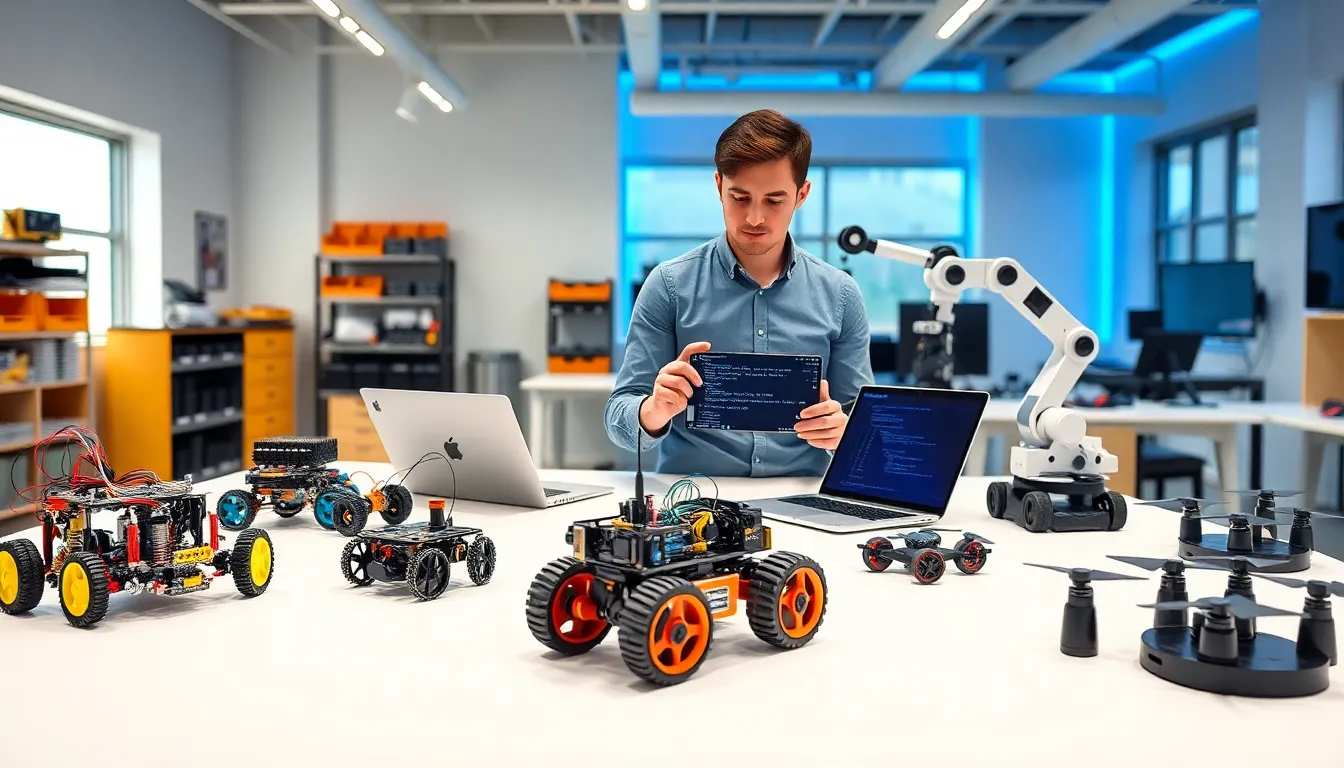

Finding the best robotics kit or platform depends on skill level, budget, and project goals. Whether someone is building their first wheeled robot or designing an autonomous drone, the right choice makes all the difference. This guide covers the top robotics options available today for beginners, hobbyists, and professionals. Readers will learn about different kit types, standout products in each category, and how to pick the best robotics platform for their needs.
Table of Contents
ToggleKey Takeaways
- The best robotics kit depends on your skill level, budget, and project goals—beginners should start with pre-assembled or modular options like LEGO Mindstorms or VEX GO.
- Arduino and Raspberry Pi platforms offer hobbyists maximum flexibility for DIY robotics projects with strong community support.
- Professional and research applications require industrial-grade platforms like Universal Robots arms or Boston Dynamics Spot for precision and reliability.
- Always factor in total costs including spare parts, sensors, and software licenses when choosing the best robotics platform.
- Evaluate community support and expandability before purchasing—active user communities and modular designs help you grow your skills over time.
Types of Robotics Kits and Platforms
Robotics kits and platforms fall into several categories based on their design, purpose, and target user.
Pre-assembled Robots
These come ready to use out of the box. Users can start programming immediately without building anything. Examples include Sphero robots and Anki Vector. They’re ideal for learning coding basics.
Modular Kits
Modular robotics kits include snap-together components. LEGO Mindstorms and VEX IQ are popular examples. Users build custom robots from standardized parts. These kits teach both mechanical assembly and programming.
DIY and Open-Source Platforms
Arduino and Raspberry Pi form the backbone of many DIY robotics projects. These platforms offer maximum flexibility. Builders choose their own motors, sensors, and frames. The learning curve is steeper, but the possibilities are nearly endless.
Educational Platforms
Schools often use platforms designed specifically for classroom instruction. These include Ozobot, Dash robots, and Edison robots. They feature age-appropriate interfaces and curriculum support.
Industrial and Research Platforms
Professional robotics platforms like Boston Dynamics Spot or Universal Robots arms serve commercial and research purposes. They cost significantly more but offer precision, durability, and advanced capabilities.
Each type serves different goals. Beginners benefit from pre-assembled or modular options. Professionals need industrial-grade systems with proven reliability.
Best Robotics for Beginners and Students
Students and beginners need robotics kits that teach fundamentals without overwhelming them. The best robotics options for this group balance ease of use with educational value.
LEGO Mindstorms Robot Inventor
LEGO Mindstorms remains one of the best robotics choices for students aged 10 and up. The kit includes over 900 pieces, motors, and sensors. Users program robots using a block-based interface or Python. Five pre-designed robots offer quick wins before custom builds.
VEX GO
VEX GO targets elementary students with colorful, snap-together parts. The system uses a simple coding app that introduces programming concepts gradually. Teachers appreciate the included lesson plans and activity guides.
Sphero BOLT
Spherical robots like Sphero BOLT appeal to younger learners. The device responds to block-based code or JavaScript. Built-in LED matrix displays add visual feedback to programs. It’s durable enough to survive drops and crashes.
Edison Robot
Edison robots cost under $60, making them accessible for classroom bulk purchases. They work with LEGO-compatible bricks for expanded building options. The EdBlocks programming language suits absolute beginners.
Makeblock mBot 2
The mBot 2 bridges beginner and intermediate skill levels. It features Wi-Fi connectivity, a built-in microphone, and multiple sensors. Students can upgrade to more advanced programming as their skills grow.
These best robotics kits share common traits: clear instructions, visual programming options, and room to grow.
Top Robotics for Hobbyists and Makers
Hobbyists want more control and customization than entry-level kits provide. The best robotics platforms for makers offer flexibility without requiring engineering degrees.
Arduino-Based Kits
Arduino boards power countless hobby robotics projects. Starter kits from Elegoo and SunFounder include wheels, chassis, motors, and sensors. Users learn C++ programming while building functional robots. The Arduino community provides thousands of free tutorials and project ideas.
Raspberry Pi Robots
Raspberry Pi single-board computers enable more complex projects. A Pi-powered robot can run computer vision, process voice commands, or connect to cloud services. The PiCar-X from SunFounder offers a complete Raspberry Pi robotics platform.
Boston Dynamics Spot SDK (Developer Edition)
Serious hobbyists with deep pockets can access Spot’s software development kit. This allows custom programming of the famous quadruped robot. It’s one of the best robotics options for those wanting to work with cutting-edge hardware.
Hexapod and Quadruped Kits
Walking robots challenge builders to master servo control and kinematics. Kits from Freenove and LewanSoul provide pre-cut frames and servo motors. Programming leg coordination teaches valuable skills.
Drone Building Kits
Aerial robotics appeals to many hobbyists. Kits from Holybro and iFlight let makers build custom quadcopters. Flight controllers like Pixhawk support autonomous missions and GPS navigation.
The best robotics choice for hobbyists depends on interests. Ground robots, drones, and walking machines each offer unique challenges and rewards.
Advanced Robotics for Professionals and Researchers
Professional and research applications demand the best robotics platforms available. These systems prioritize precision, repeatability, and integration with existing workflows.
Universal Robots Collaborative Arms
Universal Robots makes some of the best robotics arms for industrial automation. Their collaborative robots (cobots) work safely alongside humans. The UR5e and UR10e handle tasks from assembly to quality inspection. Programming uses an intuitive teach pendant interface.
Boston Dynamics Spot Enterprise
Spot serves inspection, data collection, and research purposes. It handles rough terrain that wheeled robots can’t manage. APIs allow developers to build custom applications on the platform.
NVIDIA Isaac Platform
NVIDIA’s Isaac robotics platform accelerates AI development. It includes simulation tools, pre-trained models, and hardware acceleration. Researchers use Isaac to develop autonomous systems faster.
ROS 2 Compatible Platforms
The Robot Operating System (ROS 2) has become the standard framework for robotics research. Platforms like Clearpath Robotics’ Jackal and TurtleBot 4 come pre-configured for ROS 2. This speeds up prototyping and reduces integration headaches.
ABB and FANUC Industrial Arms
Manufacturing facilities rely on ABB and FANUC robots for welding, painting, and material handling. These represent the best robotics options for high-volume production environments.
Professionals should evaluate total cost of ownership, support availability, and ecosystem compatibility when selecting platforms.
How to Choose the Right Robotics Platform
Selecting the best robotics platform requires honest assessment of several factors.
Define Clear Goals
What should the robot do? A classroom teaching tool differs from a warehouse automation system. Write down specific tasks and capabilities before shopping.
Match Skill Level
Beginners who jump into advanced platforms often get frustrated and quit. Start with appropriate difficulty. Users can always upgrade later as skills improve.
Consider Budget Realistically
Robotics costs extend beyond the initial purchase. Factor in spare parts, additional sensors, software licenses, and learning materials. The best robotics kit at any price point delivers value through quality components and good documentation.
Check Community and Support
Active user communities solve problems faster than manufacturer support alone. Arduino and Raspberry Pi benefit from massive online communities. Niche platforms may leave users struggling alone.
Evaluate Expandability
Will the platform grow with the user? Modular systems allow gradual upgrades. Closed ecosystems may require complete replacement when users outgrow them.
Review Software Options
Some platforms lock users into proprietary programming environments. Others support multiple languages and development tools. Flexibility matters for long-term learning.
The best robotics choice balances current needs with future growth. Spending time on research upfront prevents expensive mistakes later.


