
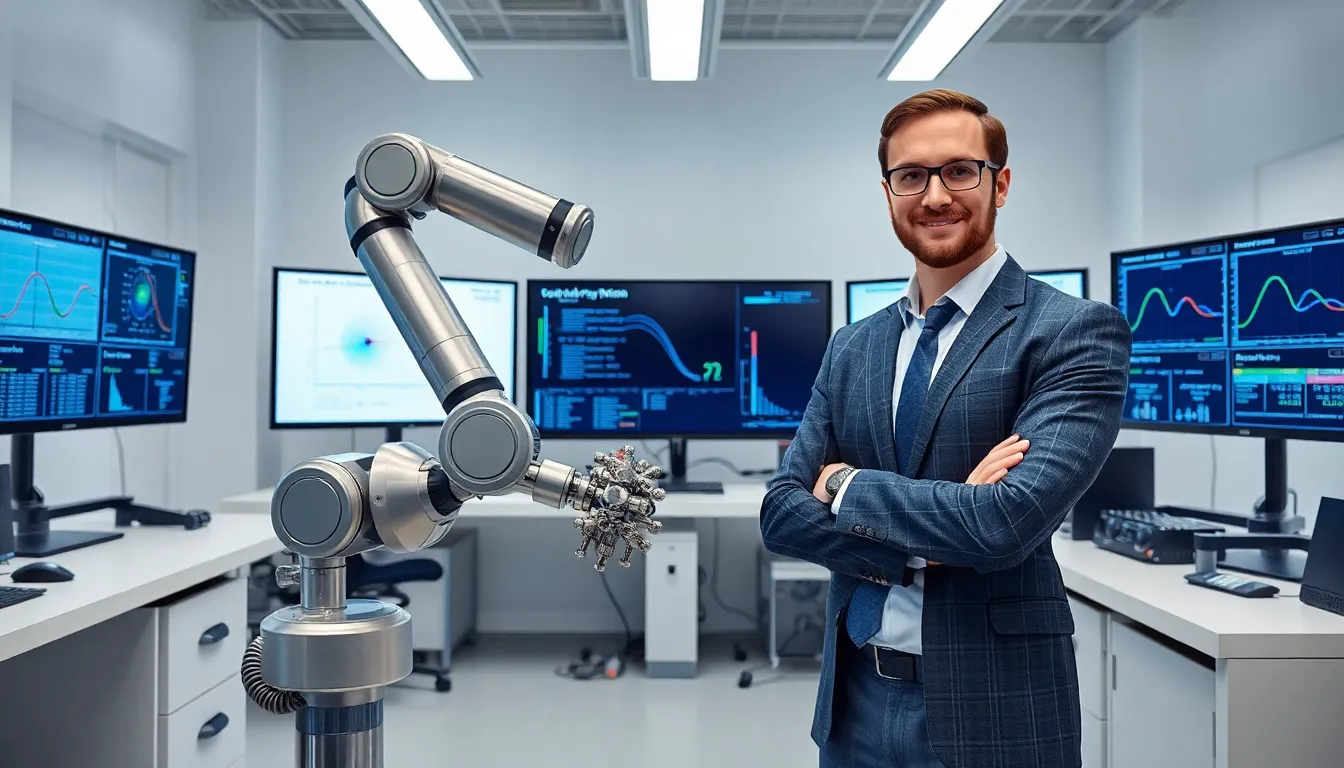

Robotics techniques form the backbone of modern automation systems. These methods enable machines to sense their environment, make decisions, and execute precise movements. From factory floors to surgical suites, robots now perform tasks that once required human hands.
This article explores the core robotics techniques that engineers and developers use today. Readers will learn about control systems, motion planning, machine learning integration, and sensor fusion. Each method plays a specific role in making robots smarter, faster, and more reliable.
Table of Contents
ToggleKey Takeaways
- Robotics techniques like PID control, Model Predictive Control, and feedback systems enable robots to execute precise, stable movements in industrial and surgical applications.
- Motion planning algorithms such as A* and SLAM allow robots to navigate autonomously, avoid obstacles, and map unfamiliar environments in real time.
- Machine learning integration, including reinforcement learning and computer vision, enables robots to learn from experience and identify objects with high accuracy.
- Sensor fusion combines data from cameras, LiDAR, and tactile sensors to create reliable environmental models that overcome individual sensor limitations.
- Imitation learning accelerates robot programming by letting machines learn new tasks directly from human demonstrations.
- Modern robotics techniques prioritize adaptability, allowing robots to handle uneven terrain, recover from disturbances, and manipulate delicate objects safely.
Fundamental Control Techniques in Robotics
Control techniques determine how robots respond to commands and maintain stability. These robotics techniques translate high-level instructions into precise motor actions.
PID Control
Proportional-Integral-Derivative (PID) control remains the most widely used method in robotics. This technique calculates the error between desired and actual positions, then adjusts motor outputs accordingly. Industrial robot arms rely heavily on PID controllers for accurate positioning.
The proportional component responds to current error. The integral component addresses accumulated past errors. The derivative component predicts future error based on rate of change. Together, these three elements create smooth, accurate movements.
Model Predictive Control
Model Predictive Control (MPC) uses mathematical models to predict future robot behavior. This robotics technique optimizes control actions over a defined time horizon. MPC works especially well for systems with multiple inputs and outputs.
Manufacturing robots use MPC to coordinate complex assembly tasks. The technique handles constraints like joint limits and collision avoidance during operation.
Feedback vs. Feedforward Control
Feedback control reacts to measured errors after they occur. Feedforward control anticipates disturbances and compensates before errors happen. Most modern robotics techniques combine both approaches for optimal performance.
A welding robot, for example, uses feedback to track the weld seam. It also uses feedforward compensation to account for known material variations.
Motion Planning and Navigation Methods
Motion planning determines how a robot moves from point A to point B. These robotics techniques must find paths that avoid obstacles while optimizing for speed, energy, or safety.
Path Planning Algorithms
The A* algorithm finds optimal paths through grid-based environments. It balances exploration with goal-seeking behavior. Warehouse robots use A* to route themselves between shelving units.
Rapidly-exploring Random Trees (RRT) excel at planning in high-dimensional spaces. Robot arms with six or more joints benefit from RRT-based robotics techniques. The algorithm samples random configurations and builds a tree toward the goal.
SLAM Technology
Simultaneous Localization and Mapping (SLAM) lets robots build maps while tracking their position. This robotics technique proves essential for autonomous mobile robots. Vacuum cleaners, delivery bots, and drones all depend on SLAM.
Visual SLAM uses camera images to identify landmarks. LiDAR SLAM uses laser distance measurements for greater precision. Both approaches update the map continuously as the robot moves.
Trajectory Optimization
Trajectory optimization generates smooth motion profiles. These robotics techniques minimize jerk, the rate of acceleration change, to reduce mechanical wear. Industrial robots achieve faster cycle times through optimized trajectories.
Spline-based methods create continuous curves through waypoints. The robot follows these curves rather than stopping at each point.
Machine Learning and AI Integration
Machine learning has transformed modern robotics techniques. AI enables robots to learn from experience rather than following only programmed instructions.
Reinforcement Learning
Reinforcement learning trains robots through trial and error. The system receives rewards for successful actions and penalties for failures. Over thousands of attempts, robots discover effective strategies.
Boston Dynamics uses reinforcement learning to teach quadruped robots to walk. The robots learn to recover from pushes and handle uneven terrain. These robotics techniques produce more adaptable behavior than traditional programming.
Computer Vision
Deep learning has revolutionized robot vision systems. Convolutional neural networks identify objects in camera images with high accuracy. Pick-and-place robots use these robotics techniques to locate items on conveyor belts.
Object detection networks like YOLO process images in real time. A sorting robot can classify dozens of items per second. Pose estimation algorithms determine object orientation for grasping.
Imitation Learning
Imitation learning lets robots learn by watching human demonstrations. An operator shows the desired motion, and the robot reproduces it. This robotics technique speeds up programming for new tasks.
Cobots, collaborative robots, often use imitation learning for setup. A worker guides the arm through a motion path, and the robot memorizes each position.
Sensor Fusion and Perception Techniques
Sensor fusion combines data from multiple sources to create accurate environmental models. These robotics techniques overcome the limitations of individual sensors.
Multi-Sensor Integration
Robots typically use cameras, LiDAR, ultrasonic sensors, and inertial measurement units (IMUs). Each sensor type has strengths and weaknesses. Cameras provide rich visual data but struggle in darkness. LiDAR measures distance precisely but misses color and texture.
Kalman filters represent the classic approach to sensor fusion. This robotics technique weighs measurements by their estimated accuracy. The filter produces optimal state estimates from noisy sensor data.
3D Perception
Depth cameras and stereo vision create 3D point clouds. These robotics techniques let robots understand spatial relationships. A bin-picking robot identifies which part sits on top.
Point cloud processing algorithms segment objects from backgrounds. Registration algorithms align multiple scans into coherent models. These steps enable robots to interact with cluttered environments.
Tactile Sensing
Force and torque sensors measure contact between robots and objects. These robotics techniques enable delicate manipulation. A robot can grasp an egg without breaking it.
Skin-like sensor arrays provide distributed touch feedback. Researchers continue developing sensors that match human fingertip sensitivity.


