
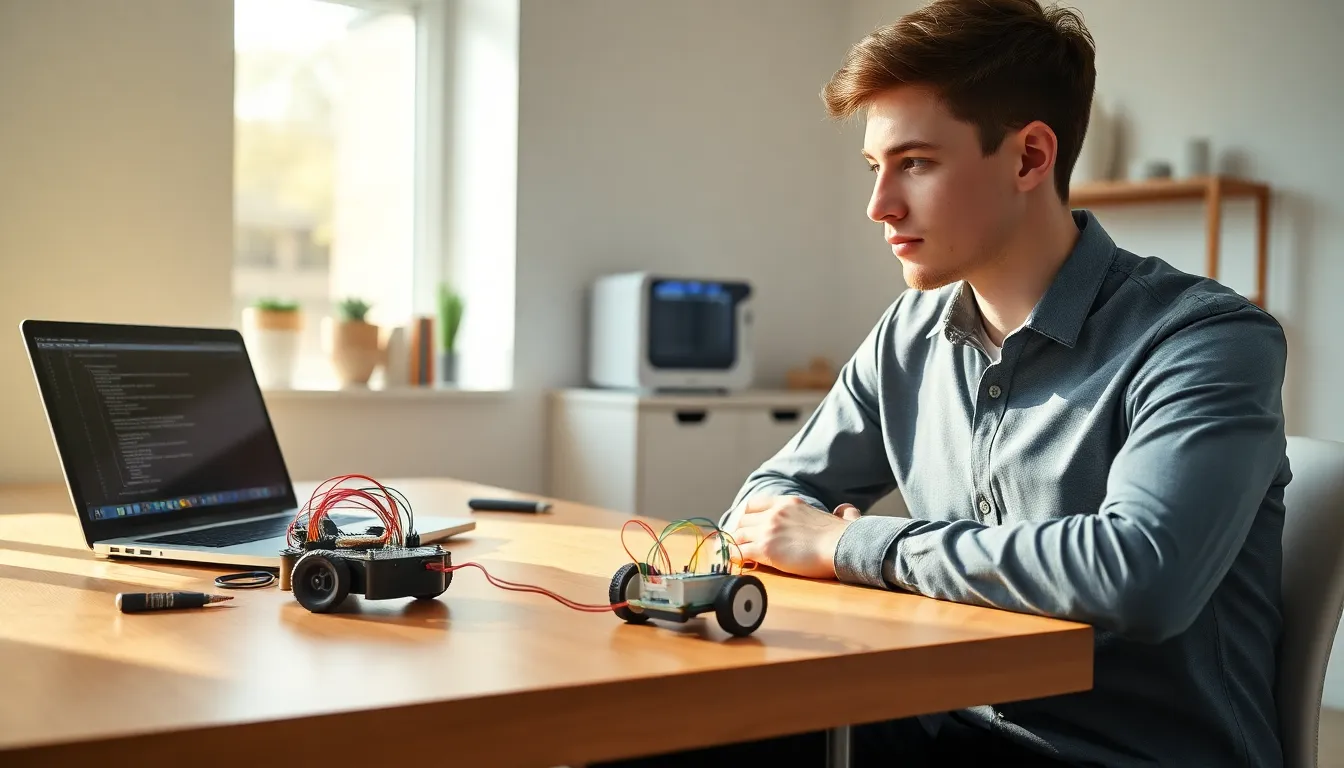

Robotics for beginners opens the door to one of the most exciting and practical fields in technology today. Whether someone dreams of building autonomous machines, automating tasks at home, or launching a career in engineering, learning robotics provides a solid foundation. This guide covers everything a newcomer needs: core concepts, essential skills, starter kits, beginner projects, and resources for continued growth. By the end, readers will have a clear roadmap to start their robotics journey with confidence.
Table of Contents
ToggleKey Takeaways
- Robotics for beginners combines programming, electronics, and mechanical concepts to build a strong foundation in technology.
- Start with an Arduino-based robot kit in the $50–$100 range for the best balance of affordability and learning potential.
- Hands-on projects like blinking LEDs, obstacle-avoiding robots, and line-following robots accelerate learning faster than theory alone.
- Essential skills include Python or C++ programming, basic electronics, and understanding how sensors and actuators work together.
- Embrace a problem-solving mindset—debugging and iteration are key to progressing in robotics.
- Continue learning through online courses, YouTube tutorials, books, and local makerspaces to grow your skills over time.
What Is Robotics and Why Learn It?
Robotics is the branch of technology that deals with designing, building, and operating robots. A robot is a programmable machine capable of carrying out tasks autonomously or semi-autonomously. These tasks range from simple movements to complex decision-making based on sensor input.
So why should beginners care about robotics? Here are a few compelling reasons:
- Career opportunities: The robotics industry continues to grow rapidly. According to the International Federation of Robotics, global robot installations reached over 500,000 units in 2023. Companies need engineers, programmers, and technicians who understand how robots work.
- Problem-solving skills: Building robots teaches logical thinking, troubleshooting, and creativity. These skills transfer to almost any technical field.
- Hands-on learning: Robotics combines theory with practice. Beginners get to see their code and designs come to life, which makes learning more engaging.
- Fun factor: Let’s be honest, making a robot move, sense its environment, or complete a task is just cool.
Robotics for beginners doesn’t require a PhD or years of experience. It requires curiosity, patience, and a willingness to experiment.
Essential Skills and Concepts for Beginners
Starting in robotics means learning a mix of skills from different disciplines. Here are the core areas every beginner should explore:
Programming
Robots need instructions. Programming languages like Python, C++, and Arduino’s simplified C are popular choices for robotics. Python works well for beginners because of its readable syntax. Arduino is ideal for controlling hardware directly.
Electronics Basics
Understanding circuits, voltage, current, and resistance helps beginners connect motors, sensors, and microcontrollers. Learning to read a basic circuit diagram saves hours of frustration.
Mechanical Concepts
Robots have physical components: wheels, gears, arms, and frames. Beginners benefit from understanding how these parts move and interact. Simple physics concepts like torque and friction become relevant quickly.
Sensors and Actuators
Sensors allow robots to perceive their environment. Common types include ultrasonic sensors (for distance), infrared sensors (for object detection), and light sensors. Actuators, mainly motors and servos, enable movement. Learning how sensors feed data to a controller, which then commands actuators, is fundamental to robotics for beginners.
Problem-Solving Mindset
Things will break. Code won’t work on the first try. Beginners who embrace debugging and iteration progress faster than those who expect perfection immediately.
Choosing Your First Robotics Kit or Platform
Selecting the right kit can make or break a beginner’s experience. The best kits balance affordability, learning potential, and room to grow.
Arduino-Based Kits
Arduino remains one of the most popular platforms for robotics beginners. Kits like the Arduino Starter Kit or Elegoo Robot Car Kit include microcontrollers, sensors, motors, and step-by-step tutorials. Arduino’s open-source community provides extensive documentation and project ideas.
Raspberry Pi Projects
Raspberry Pi offers more computing power than Arduino. It runs a full Linux operating system, making it suitable for projects that require image processing or internet connectivity. Beginners comfortable with basic programming often enjoy the flexibility Raspberry Pi provides.
LEGO Mindstorms and Spike Prime
These kits use modular, snap-together components. They’re excellent for younger beginners or anyone who wants to focus on programming logic without soldering or wiring. The tradeoff is less customization compared to Arduino or Raspberry Pi.
VEX Robotics
VEX offers kits designed for educational settings and competitions. They’re more expensive but provide durable parts and a clear learning path.
Recommendation for most beginners: Start with an Arduino-based robot kit in the $50–$100 range. It offers the best combination of affordability, learning depth, and community support for those new to robotics.
Simple Projects to Build Your Foundation
Theory only goes so far. Building actual projects teaches robotics for beginners faster than reading textbooks alone.
Project 1: Blinking LED
Every robotics journey starts here. Controlling an LED with code teaches the basics of digital output, timing, and uploading programs to a microcontroller. It takes about 15 minutes and builds confidence.
Project 2: Light-Following Robot
This project uses light sensors to detect brightness and motors to move toward the light source. Beginners learn sensor input, conditional logic, and motor control. It’s a satisfying step up from static circuits.
Project 3: Obstacle-Avoiding Robot
An ultrasonic sensor measures distance to objects. When the robot detects an obstacle, it stops and turns. This project introduces decision-making in code and teaches beginners how robots interact with their environment.
Project 4: Line-Following Robot
Using infrared sensors, the robot follows a black line on a white surface (or vice versa). This classic project teaches sensor calibration and proportional control. It’s a stepping stone to more advanced autonomous navigation.
Project 5: Remote-Controlled Robot
Adding Bluetooth or infrared remote control lets beginners experiment with wireless communication. Controlling a robot from a smartphone app feels impressive and teaches valuable concepts about data transmission.
Each project builds on the previous one. Beginners should complete them to develop skills progressively.
Resources for Continued Learning
Once beginners complete their first projects, they’ll want more. Here are reliable resources to keep learning robotics:
Online Courses
- Coursera offers robotics courses from universities like the University of Pennsylvania.
- Udemy has affordable courses on Arduino, Raspberry Pi, and specific robotics topics.
- edX provides free introductory courses with optional paid certificates.
YouTube Channels
Channels like DroneBot Workshop, Paul McWhorter, and Andreas Spiess offer practical tutorials. Watching someone build a project helps beginners understand processes that text alone can’t convey.
Books
- Arduino Robotics by John-David Warren covers robotics fundamentals using Arduino.
- Make: Electronics by Charles Platt teaches electronics from scratch with hands-on experiments.
- Programming Robots with ROS introduces the Robot Operating System for those ready to advance.
Communities and Forums
The Arduino Forum, Reddit’s r/robotics, and Stack Exchange’s Robotics community answer questions and share projects. Joining a community accelerates learning and provides motivation.
Local Clubs and Makerspaces
Many cities have robotics clubs, maker fairs, or hackerspaces where beginners can learn from experienced builders. In-person collaboration often solves problems faster than online searching.
Robotics for beginners is a journey, not a destination. These resources support learners at every stage.


