
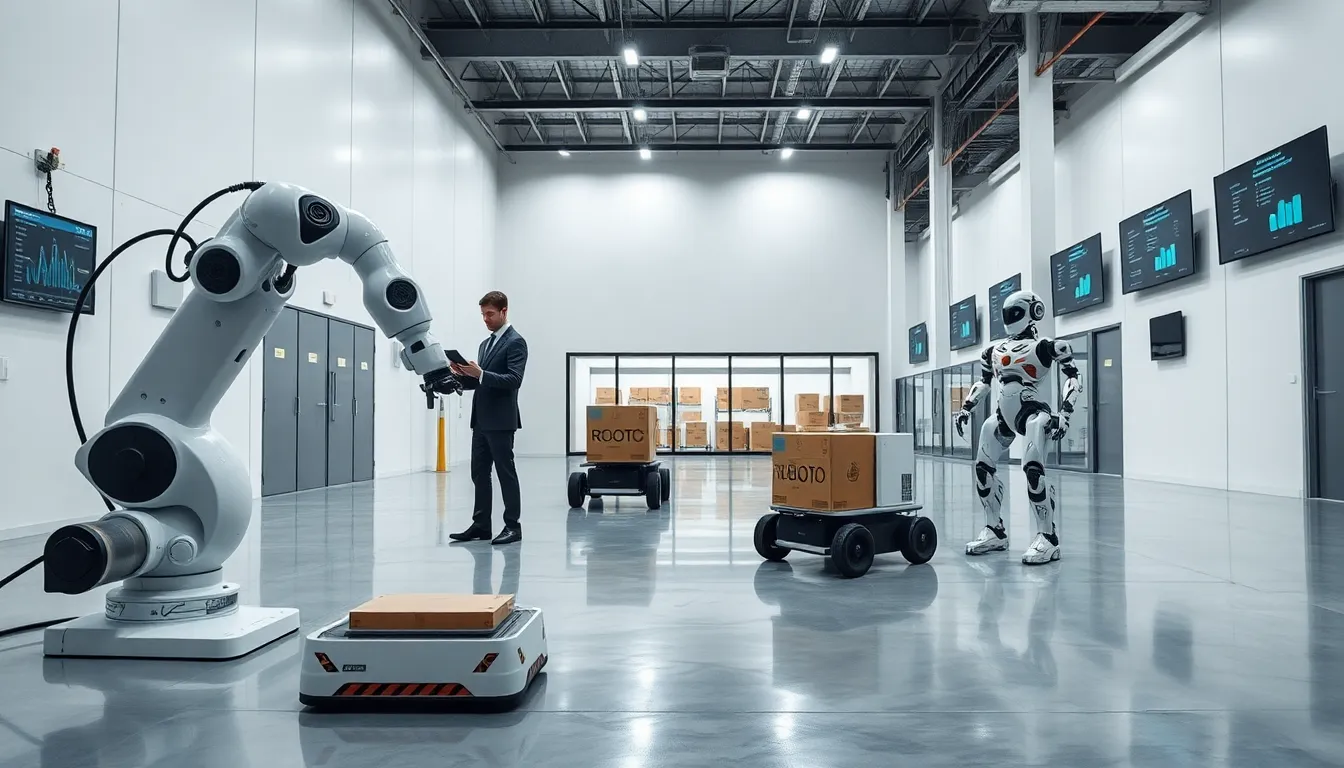

Top robotics technologies are transforming industries at a pace that would have seemed impossible just a decade ago. Factory floors now hum with collaborative machines. Hospitals deploy surgical robots with sub-millimeter precision. Warehouses run on autonomous vehicles that never need a coffee break.
This shift isn’t just about automation, it’s about capability. Modern robots see, learn, and adapt. They handle tasks that once required human intuition. And they’re getting better every year.
This article examines the leading systems driving this change. It covers industrial robots, humanoid machines, autonomous mobile robots, and the trends shaping 2025 and beyond. Whether someone works in manufacturing, logistics, or healthcare, understanding top robotics helps them stay ahead of the curve.
Table of Contents
ToggleKey Takeaways
- Top robotics technologies are revolutionizing industries including manufacturing, healthcare, logistics, and hospitality with machines that see, learn, and adapt.
- Collaborative robots (cobots) now work safely alongside humans for under $50,000, making advanced robotics accessible to small and mid-sized businesses.
- Humanoid robots from Tesla, Boston Dynamics, and startups like Figure AI are transitioning from prototypes to real-world factory deployments in 2025.
- Autonomous mobile robots (AMRs) are transforming warehouses—Amazon alone operates over 750,000 units, dramatically increasing efficiency and reducing costs.
- Emerging trends like AI-powered learning, soft robotics, and Robot-as-a-Service (RaaS) models are lowering barriers and expanding applications for top robotics.
- The industrial robotics market is projected to grow from $16.5 billion in 2024 to over $30 billion by 2030, signaling massive investment opportunities.
Leading Industrial Robotics Systems
Industrial robotics remains the backbone of modern manufacturing. These machines weld car frames, assemble electronics, and package consumer goods with speed and consistency humans can’t match.
FANUC, ABB, and KUKA dominate this space. FANUC alone has installed over 900,000 robots worldwide. Their machines operate in automotive plants, semiconductor fabs, and food processing facilities across six continents.
Collaborative Robots (Cobots)
Collaborative robots, or cobots, represent a major shift in industrial robotics. Unlike traditional industrial robots that work behind safety cages, cobots operate alongside human workers. They sense contact and stop immediately, eliminating the risk of injury.
Universal Robots pioneered this category. Their UR series handles tasks like machine tending, quality inspection, and light assembly. A single cobot can cost under $50,000, making top robotics accessible to small and mid-sized manufacturers.
Heavy-Duty Applications
At the other end of the spectrum, heavy-duty robots handle payloads exceeding 1,000 kilograms. KUKA’s KR 1000 titan, for example, moves entire car bodies through assembly lines. These machines require significant infrastructure but deliver unmatched throughput.
The industrial robotics market reached $16.5 billion in 2024. Analysts project it will exceed $30 billion by 2030. This growth reflects both increased adoption in established markets and expansion into new sectors like food service and construction.
Breakthroughs in Humanoid Robots
Humanoid robots have moved from science fiction to functional prototypes. Several companies now demonstrate machines that walk, climb stairs, and manipulate objects with human-like dexterity.
Boston Dynamics led early development with Atlas. This hydraulic robot performs backflips, navigates rough terrain, and recovers from pushes that would topple most machines. The company recently transitioned to an all-electric Atlas design, improving efficiency and reducing maintenance requirements.
Tesla Optimus and Commercial Ambitions
Tesla’s Optimus robot represents a different approach to top robotics. Rather than pursuing athletic performance, Tesla focuses on practical capability at scale. Optimus aims to handle repetitive tasks in factories and eventually homes.
Prototypes demonstrated in 2024 sorted objects, folded clothes, and navigated indoor environments. Tesla plans limited deployment in its own factories during 2025. The company targets an eventual price point below $20,000, a fraction of current humanoid robot costs.
Figure and Agility Robotics
Startups are also making significant progress. Figure AI secured over $675 million in funding and partnered with BMW to test its Figure 01 robot in automotive manufacturing. Agility Robotics’ Digit already operates in Amazon warehouses, moving totes between stations.
These humanoid systems share a common vision: general-purpose robots that adapt to existing human environments. Instead of redesigning factories for robots, the robots adapt to human spaces. This approach could dramatically expand the addressable market for top robotics technologies.
Autonomous Mobile Robots and Their Applications
Autonomous mobile robots (AMRs) move goods without human guidance. They use sensors, cameras, and AI to map environments and avoid obstacles. Unlike automated guided vehicles that follow fixed paths, AMRs adapt to changing layouts and traffic.
Amazon operates over 750,000 mobile robots across its fulfillment network. These machines transport shelving units to human workers, cutting walking time and increasing pick rates. The result: faster deliveries and lower operating costs.
Warehouse and Logistics
Top robotics companies like Locus Robotics, 6 River Systems, and Fetch Robotics (now part of Zebra Technologies) supply AMRs to third-party logistics providers. Their robots work alongside human pickers, guiding them through optimal routes and carrying completed orders.
Deployment numbers tell the story. Locus Robotics reported that its robots completed over 2 billion picks in 2024. DHL, GEODIS, and other logistics giants continue expanding their AMR fleets.
Healthcare and Hospitality
AMRs also serve hospitals and hotels. Aethon’s TUG robots deliver medications, linens, and meals through hospital corridors. They navigate elevators, open doors, and avoid patients and staff.
In hospitality, robots from Relay Robotics and Savioke deliver room service and amenities. These applications reduce labor costs and free human staff for guest-facing interactions.
The AMR market shows no signs of slowing. Annual shipments exceeded 100,000 units in 2024, and analysts expect that number to triple by 2028.
Emerging Trends in Robotics for 2025 and Beyond
Several trends will shape top robotics development over the coming years. Each builds on current capabilities while opening new applications.
AI-Powered Learning and Adaptation
Machine learning transforms what robots can do. Traditional robots execute pre-programmed sequences. Modern systems learn from demonstration, adapt to new objects, and improve through experience.
Google DeepMind’s RT-2 model enables robots to understand natural language commands and generalize to novel tasks. A robot trained to pick up a specific tool can now pick up tools it has never seen, a capability that seemed distant just three years ago.
Soft Robotics
Soft robots use flexible materials instead of rigid metal and plastic. They grip delicate objects without damage and conform to irregular shapes. Applications range from fruit harvesting to minimally invasive surgery.
Companies like Soft Robotics Inc. and RightHand Robotics commercialize these systems for food handling and e-commerce fulfillment. Their grippers handle tomatoes, bagged salads, and other items that would challenge traditional robots.
Robot-as-a-Service (RaaS)
Not every company can afford large capital investments. Robot-as-a-Service models let businesses deploy top robotics with monthly fees instead of upfront purchases. This approach lowers barriers and accelerates adoption.
Forager, Locus Robotics, and others offer RaaS programs. Customers pay per task or per hour, scaling their robotic workforce with demand.
Integration and Interoperability
As robot deployments grow, integration becomes critical. Fleet management software coordinates multiple robots from different vendors. Open standards enable interoperability between machines, sensors, and enterprise systems.
The Mass Robotics AMR Interoperability Standard, released in 2024, addresses this need. It allows robots from different manufacturers to share traffic information and coordinate movements, essential for dense multi-robot environments.


