
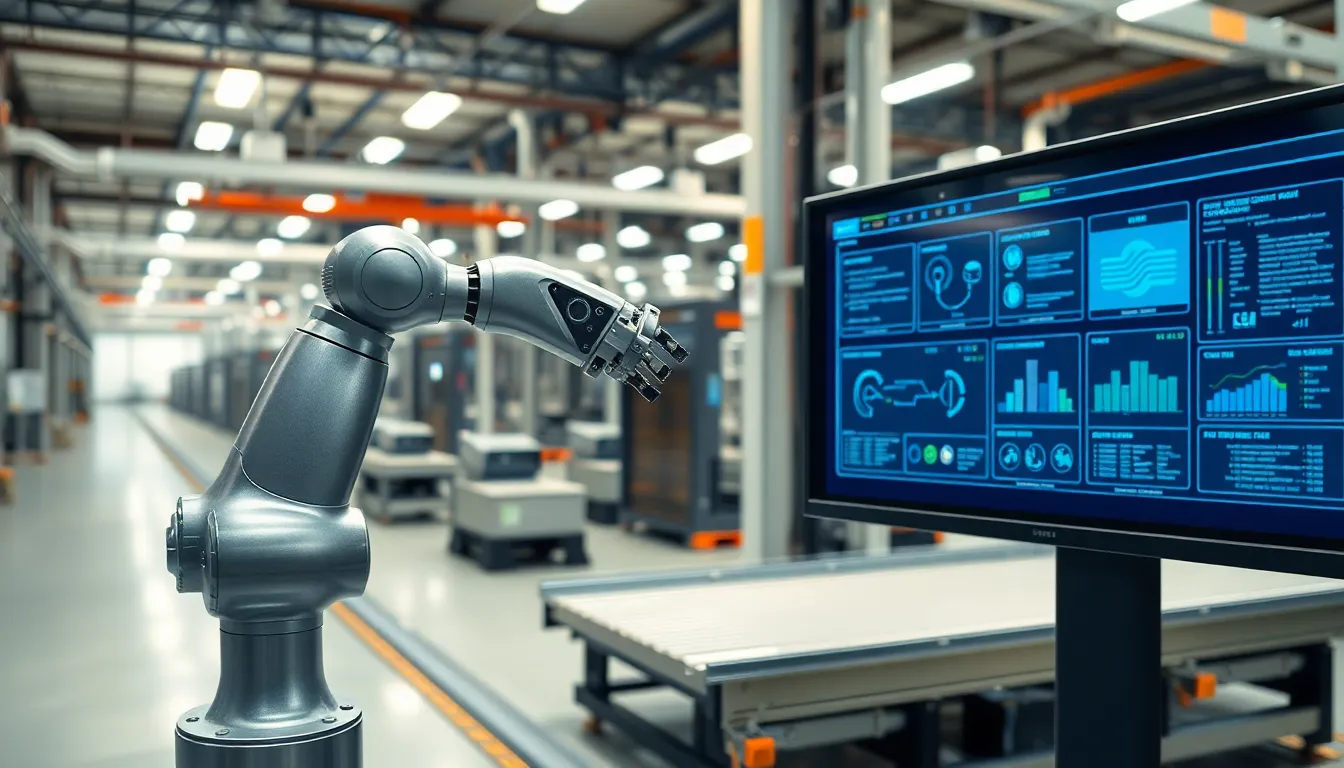

Robotics vs automation, these two terms often get tossed around interchangeably, but they’re not the same thing. Understanding the difference matters, especially if a business is looking to streamline operations, cut costs, or boost productivity. Robotics involves programmable machines that perform physical tasks. Automation refers to any technology that completes tasks with minimal human input. One is a subset of the other, and choosing incorrectly can waste time and money. This guide breaks down what each term means, highlights the core differences, and helps readers decide which solution fits their needs.
Table of Contents
ToggleKey Takeaways
- Robotics involves physical machines that perform tasks, while automation is a broader category that includes both digital and physical systems.
- In the robotics vs automation debate, robotics is actually a subset of automation—every robot automates something, but not all automation uses robots.
- Choose robotics for variable physical tasks, dangerous environments, precision requirements, or when flexibility to reprogram is essential.
- Opt for software automation when handling repetitive digital tasks, working with budget constraints, or needing quick implementation.
- Robotics typically requires higher upfront investment but offers greater flexibility, while traditional automation costs less and suits high-volume, identical processes.
- Many businesses combine both approaches—using robots on production floors while automating back-office functions with software.
What Is Robotics?
Robotics is a branch of engineering and computer science focused on designing, building, and operating robots. A robot is a programmable machine capable of carrying out physical actions. These machines interact with the real world through sensors, actuators, and control systems.
Most people picture industrial robot arms when they think of robotics. Manufacturing plants use these machines to weld car frames, assemble electronics, and package products. But robotics extends far beyond factories. Surgical robots assist doctors during operations. Delivery robots transport packages across neighborhoods. Agricultural robots plant seeds and harvest crops.
What sets robotics apart is adaptability. Engineers can program robots to handle multiple tasks. A robotic arm might weld one day and paint the next. This flexibility comes from sophisticated software and hardware working together.
Robotics also involves artificial intelligence in many modern applications. AI-powered robots can learn from their environment, recognize objects, and make decisions. A warehouse robot, for example, can identify packages, calculate the fastest route, and avoid obstacles, all without human guidance.
The robotics industry continues to grow rapidly. According to the International Federation of Robotics, global robot installations reached over 500,000 units in 2023. This growth reflects increasing demand across manufacturing, healthcare, logistics, and service industries.
What Is Automation?
Automation is the use of technology to perform tasks with minimal human intervention. It’s a broad category that includes software, machinery, and processes designed to operate independently.
Think about everyday examples. Email filters automatically sort incoming messages. Thermostats adjust heating and cooling based on programmed schedules. Assembly lines move products from one station to the next without workers pushing them along. All of these qualify as automation.
Automation breaks down into several types:
- Fixed automation uses specialized equipment to produce large volumes of identical items. Think bottling plants or paper mills.
- Programmable automation allows equipment to be reprogrammed for different product batches. This works well for medium-volume production.
- Flexible automation enables quick changeovers between products with little downtime.
- Software automation handles digital tasks like data entry, report generation, and customer service chatbots.
Businesses adopt automation to reduce errors, speed up processes, and lower labor costs. A company might automate invoice processing to free up accountants for higher-value work. An e-commerce platform might automate inventory tracking to prevent stockouts.
Automation doesn’t always involve physical machines. Robotic Process Automation (RPA), even though its name, typically refers to software bots that mimic human actions on computers. These bots can log into applications, copy data between systems, and generate reports, all without physical hardware.
Core Differences Between Robotics and Automation
The robotics vs automation debate often confuses people because the terms overlap. Here’s how they differ:
Physical vs. Non-Physical
Robotics always involves physical machines. Robots have bodies, arms, wheels, grippers, or legs, that interact with the physical world. Automation can be purely digital. Software that schedules social media posts is automation, but it’s not robotics.
Scope
Automation is the broader category. Robotics is a specific type of automation. Every robot automates something, but not every automated system uses robots. A self-checkout kiosk automates transactions without using robotics. A robotic vacuum both automates cleaning and uses robotics technology.
Flexibility
Robots typically offer more flexibility than fixed automation systems. Engineers can reprogram a robot to perform different tasks. A dedicated automated conveyor system moves items in one direction, that’s its only function.
Cost and Complexity
Robotics generally requires higher upfront investment. Robots need specialized components, sensors, and programming. Simple automation, like automated email responses, costs far less to carry out.
Intelligence
Modern robotics often incorporates AI and machine learning. Robots can perceive their environment and adapt to changes. Traditional automation follows preset rules without learning or adapting.
| Factor | Robotics | Automation |
|---|---|---|
| Physical presence | Always | Not always |
| Flexibility | High | Varies |
| Initial cost | Higher | Lower to moderate |
| AI integration | Common | Less common |
| Scope | Specific | Broad |
When to Choose Robotics Over Automation
Robotics makes sense in specific situations. Here’s when businesses should consider investing in robots:
Variable tasks requiring physical manipulation. If work involves handling different objects, sizes, or materials, robots excel. A fulfillment center processing thousands of unique products benefits from robotic picking systems that can identify and grasp various items.
Dangerous environments. Robots can work where humans shouldn’t. Nuclear facilities use robots for inspections. Mining operations deploy robots to access unstable areas. Manufacturing plants use robots for tasks involving toxic chemicals or extreme temperatures.
Precision requirements. Surgical robotics allows doctors to perform procedures with sub-millimeter accuracy. Electronics manufacturing uses robots to place tiny components that human hands can’t reliably position.
Scalable flexibility. Companies expecting product changes should consider robotics. Reprogramming a robot costs less than replacing fixed automation equipment.
Labor shortages. Industries struggling to fill positions, like agriculture and elder care, increasingly turn to robotics. The technology handles tasks that humans either can’t or won’t perform at scale.
When Automation Makes More Sense
Automation without robotics often delivers better ROI for many business needs. Consider these scenarios:
Repetitive digital tasks. Data entry, invoice processing, and report generation don’t need physical machines. Software automation handles these faster and cheaper than any robot could.
High-volume, identical processes. Bottling plants and paper mills run fixed automation efficiently. When output stays consistent, specialized equipment outperforms flexible robotics.
Budget constraints. Startups and small businesses often can’t afford robotic systems. Simple automation tools, email marketing platforms, scheduling software, inventory management systems, deliver quick wins at lower cost.
Processes without physical components. Customer service chatbots, automated testing suites, and workflow management systems solve problems that don’t involve moving objects.
Quick implementation needs. Software automation can launch in days or weeks. Robotic systems typically require months of planning, installation, and testing.
Many businesses combine both approaches. A manufacturer might use robots on the production floor while automating back-office functions with software. The robotics vs automation choice isn’t always either/or, it’s about matching the right tool to each specific challenge.


