
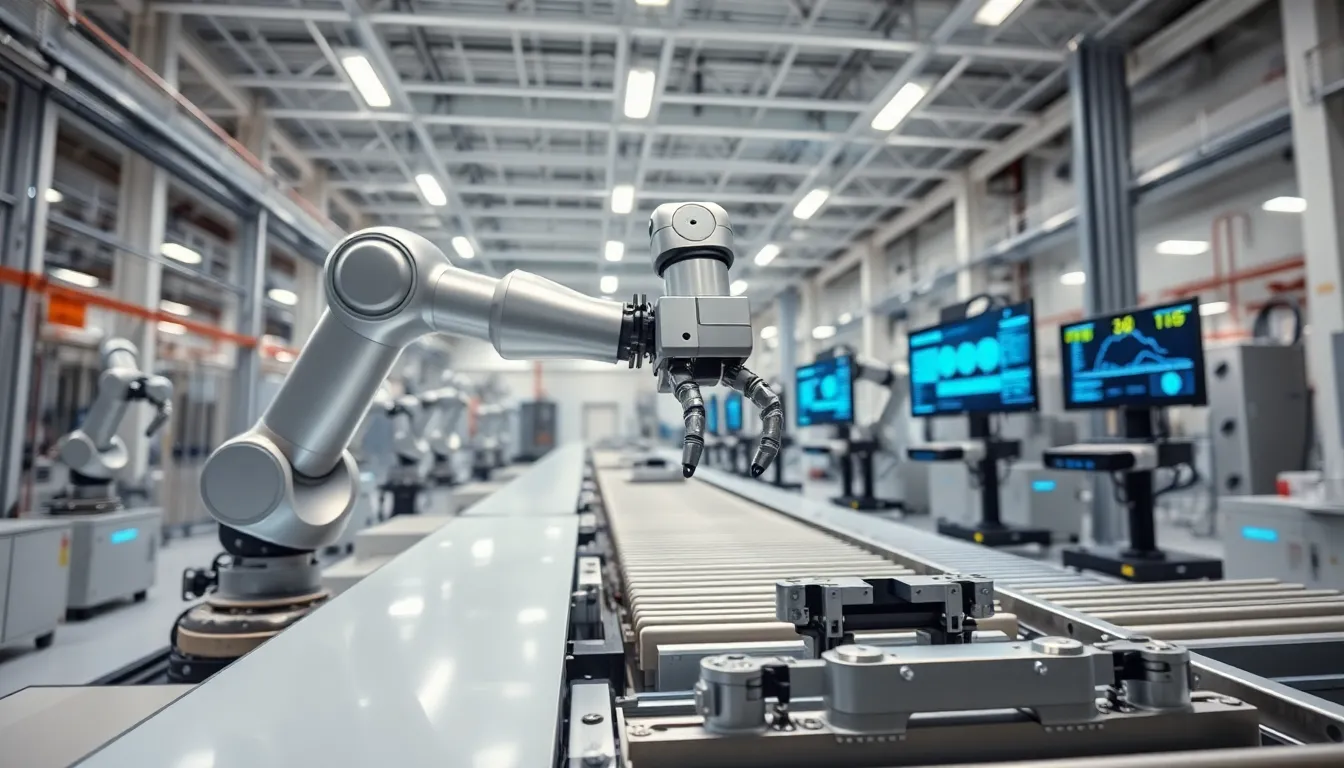

Robotics has moved from science fiction into everyday reality. From factory floors to hospital operating rooms, robots now perform tasks once reserved for humans. This technology combines engineering, computer science, and artificial intelligence to create machines that sense, think, and act.
The global robotics market reached $55.8 billion in 2024, and experts project it will exceed $165 billion by 2032. These numbers reflect a simple truth: robotics is reshaping how we work, live, and solve problems. Whether you’re a curious beginner or a professional exploring automation, understanding robotics matters now more than ever.
This guide covers the fundamentals of robotics, from basic definitions to emerging trends. Readers will learn how robots work, what components make them function, and where they’re making the biggest impact across industries.
Table of Contents
ToggleKey Takeaways
- Robotics combines engineering, computer science, and AI to create machines that sense, think, and act autonomously.
- The global robotics market is projected to grow from $55.8 billion in 2024 to over $165 billion by 2032.
- Modern robots rely on five key components: sensors, actuators, control systems, power supplies, and end effectors.
- Robotics applications span manufacturing, healthcare, logistics, agriculture, and home automation—transforming how industries operate.
- Emerging trends like AI integration, soft robotics, and swarm robotics are making robots smarter, more adaptable, and capable of complex collaboration.
- While automation may displace some jobs, robotics is expected to create 97 million new roles, emphasizing the need for workforce training.
What Is Robotics and How Does It Work
Robotics is the branch of technology that deals with designing, building, and operating robots. A robot is a programmable machine that can carry out tasks automatically or with minimal human input.
At its core, robotics works through a cycle: sense, think, act. First, sensors collect data from the environment. Then, a control system (often powered by software and AI) processes that data. Finally, actuators move the robot to complete its task.
Consider a warehouse robot picking items from shelves. Cameras and sensors identify the correct product. The onboard computer calculates the best path. Motors and grippers then grab the item and place it in a bin. This entire process happens in seconds.
Robotics draws from multiple fields. Mechanical engineering provides the physical structure. Electrical engineering handles power and circuits. Computer science delivers the programming logic. When these disciplines combine, machines can perform complex actions with precision.
The field has evolved significantly since George Devol created Unimate, the first industrial robot, in 1954. Today’s robots use machine learning to improve their performance over time. They adapt to new situations without needing reprogramming for every task.
Key Components of Modern Robots
Every robot, regardless of its purpose, relies on several essential components. Understanding these parts helps explain how robotics technology functions.
Sensors
Sensors act as a robot’s eyes, ears, and touch. They gather information about the surrounding environment. Common types include cameras for vision, LiDAR for distance measurement, gyroscopes for balance, and pressure sensors for grip control. Without sensors, a robot operates blind.
Actuators and Motors
Actuators convert energy into movement. Electric motors are the most common actuators in robotics. They power wheels, arms, grippers, and joints. Hydraulic systems provide more force for heavy-duty applications, while pneumatic actuators use compressed air for quick, repetitive motions.
Control Systems
The control system is the robot’s brain. It processes sensor data and sends commands to actuators. Modern robots use microcontrollers, programmable logic controllers (PLCs), or full computers. Advanced systems incorporate artificial intelligence to make decisions in real time.
Power Supply
Robots need energy to operate. Industrial robots typically connect to electrical outlets. Mobile robots rely on batteries, usually lithium-ion packs. Some experimental robots use solar panels or fuel cells.
End Effectors
End effectors are the tools attached to a robot’s arm or body. Grippers, welding torches, drills, and suction cups are common examples. The end effector determines what tasks the robot can perform. A single robot arm might switch between multiple end effectors for different jobs.
Major Types of Robots and Their Applications
Robotics serves diverse purposes across many sectors. Different robot types suit different tasks.
Industrial Robots
Factories use industrial robots for manufacturing. These machines weld car frames, assemble electronics, and package products. They work faster and more consistently than human workers on repetitive tasks. Automotive plants rely heavily on robotic arms for assembly lines.
Service Robots
Service robots assist people outside industrial settings. Vacuum robots clean homes. Delivery robots transport packages on sidewalks. Restaurant robots serve food to tables. This category grows rapidly as robotics becomes more affordable.
Medical Robots
Healthcare has embraced robotics for surgery, rehabilitation, and patient care. The da Vinci Surgical System allows doctors to perform minimally invasive procedures with enhanced precision. Exoskeletons help paralyzed patients walk again. Pharmacy robots dispense medications accurately.
Collaborative Robots (Cobots)
Cobots work alongside humans rather than replacing them. They handle dangerous or tedious tasks while human workers focus on complex decisions. Cobots include safety features that stop movement if they contact a person. Small manufacturers increasingly adopt cobots because they’re easier to program and deploy.
Autonomous Mobile Robots (AMRs)
AMRs navigate environments without fixed paths. Warehouse robots from companies like Amazon use AMR technology to move goods. These robots create maps, avoid obstacles, and optimize routes. They differ from older automated guided vehicles that follow set tracks.
Humanoid Robots
Humanoid robots resemble the human body. Boston Dynamics’ Atlas and Tesla’s Optimus represent this category. These robots aim to perform tasks designed for humans, from climbing stairs to handling tools. Full commercial deployment remains limited, but development accelerates yearly.
The Impact of Robotics on Industries and Daily Life
Robotics has changed how industries operate and how people live their daily lives.
Manufacturing saw the earliest transformation. Robots increased production speed by 25-40% in automotive plants. They reduced workplace injuries by handling dangerous tasks. Quality improved because robots don’t get tired or distracted.
Logistics and warehousing now depend on robotics. Amazon operates over 750,000 robots across its fulfillment centers. These machines pick, pack, and sort millions of packages daily. Order processing times dropped from hours to minutes.
Agriculture benefits from robotic harvesters, planters, and weeders. Autonomous tractors plow fields using GPS. Drones monitor crop health from above. Farmers produce more food with less labor as rural workforces shrink.
Healthcare outcomes improve with surgical robotics. Doctors perform operations through small incisions with greater accuracy. Patients experience less pain, shorter hospital stays, and faster recovery. Robotic surgery has become standard for procedures like prostatectomies.
At home, robotics handles chores once done manually. Robot vacuums clean floors. Robot mowers cut grass. Smart appliances manage household tasks. The domestic robotics market continues expanding as prices decrease.
But, robotics also raises concerns. Job displacement worries many workers. The World Economic Forum estimates automation will eliminate 85 million jobs by 2025, though it will also create 97 million new ones. Workers need training to transition into roles that robotics creates.
Emerging Trends and the Future of Robotics
Several trends are shaping where robotics heads next.
AI Integration
Artificial intelligence makes robots smarter. Machine learning allows robots to improve through experience. Computer vision helps them recognize objects and faces. Natural language processing enables voice commands. AI-powered robotics handles tasks that required human judgment just years ago.
Soft Robotics
Traditional robots use rigid materials. Soft robotics employs flexible components that mimic biological organisms. These robots grip delicate objects without damage. They squeeze into tight spaces. Medical applications benefit from soft robots that move safely inside the human body.
Swarm Robotics
Swarm robotics coordinates many simple robots to accomplish complex goals. Inspired by ants and bees, these systems don’t rely on a central controller. If one robot fails, others continue working. Researchers explore swarm robotics for search and rescue, environmental monitoring, and construction.
Human-Robot Collaboration
The future involves humans and robots working together. Augmented reality interfaces let operators control robots remotely. Wearable exoskeletons amplify human strength. Rather than full automation, many industries adopt hybrid approaches where robotics enhances human capabilities.
Edge Computing
Processing data on the robot itself (rather than in the cloud) reduces response times. Edge computing enables faster reactions for autonomous vehicles and drones. This trend proves critical for robotics applications where milliseconds matter.
Experts predict robotics will become as common as smartphones within two decades. Costs continue dropping while capabilities expand. The technology will touch nearly every industry and household.


