
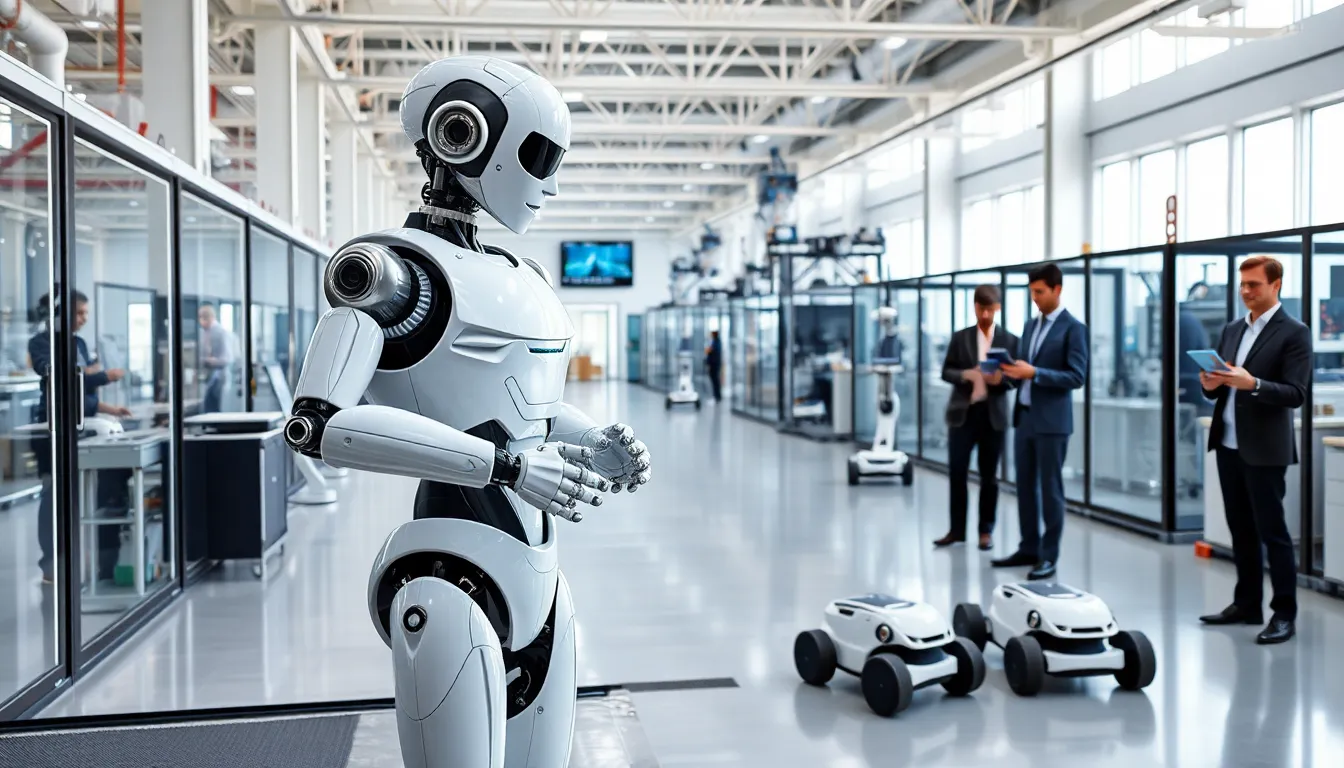

Robotics trends 2026 are shaping up to be some of the most exciting developments the industry has seen in years. From AI-driven machines that think for themselves to humanoid robots stepping off factory floors and into everyday life, the changes ahead will affect how people work, travel, and interact with technology. Companies across sectors are investing heavily in automation, and the results are starting to show. This article breaks down the key robotics trends 2026 will bring, and what they mean for businesses, workers, and consumers.
Table of Contents
ToggleKey Takeaways
- AI-powered autonomous robots in 2026 can learn on the job, process data in real time, and adapt to environments without human input.
- Humanoid robots are entering manufacturing and customer service roles, with costs expected to drop below that of a mid-range car by late 2026.
- Collaborative robots (cobots) are expanding into healthcare, agriculture, and construction to address labor shortages safely.
- Robotics trends 2026 show major advances in mobility and dexterity, enabling legged robots and dexterous hands to handle complex tasks.
- Edge computing allows robots to process data locally for faster response times in time-sensitive operations.
- Self-driving delivery vehicles and autonomous mobile robots (AMRs) are expected to become common in cities, hospitals, and retail stores.
AI-Powered Autonomous Systems
Artificial intelligence is pushing autonomous robots into new territory in 2026. These systems can now process sensor data, make real-time decisions, and adapt to changing environments without human input. Warehouses, farms, and delivery networks are adopting these machines at a faster pace than ever.
One major shift involves AI models that learn on the job. Instead of requiring pre-programmed instructions for every task, robots use machine learning to improve their performance over time. A logistics robot, for example, might optimize its picking routes after analyzing thousands of orders. This makes operations faster and reduces errors.
Autonomous mobile robots (AMRs) are also gaining ground. Unlike older automated guided vehicles that follow fixed paths, AMRs navigate freely using cameras, lidar, and AI. They can avoid obstacles, reroute themselves, and work alongside human staff safely. In 2026, expect to see these robots in hospitals, hotels, and retail stores, not just warehouses.
The robotics trends 2026 highlights also include edge computing. By processing data directly on the robot rather than sending it to a cloud server, these machines respond faster. For time-sensitive tasks like inspecting products on a fast-moving assembly line, that speed matters.
Self-driving delivery vehicles represent another growing segment. Companies are testing autonomous vans and sidewalk robots that bring packages directly to customers. Regulatory approvals are expanding, and 2026 may mark the year these services become common in major cities.
Humanoid Robots Enter the Mainstream
Humanoid robots are moving beyond research labs and into real-world applications. Several companies plan to deploy bipedal robots in manufacturing, logistics, and customer service roles during 2026.
Why humanoid? The answer is simple: human spaces are designed for human bodies. Stairs, doors, tools, and workstations all assume a certain shape and range of motion. A humanoid robot can use existing infrastructure without expensive modifications. It can pick up a box, climb a ladder, or operate a forklift, tasks that would require custom equipment for other robot designs.
Tesla’s Optimus, Figure’s 01, and Agility Robotics’ Digit are among the humanoid platforms attracting attention. These robots combine advanced AI with improved hardware, including better actuators, sensors, and battery life. Early pilots show them handling repetitive warehouse tasks, freeing human workers for jobs that require creativity or judgment.
The robotics trends 2026 conversation includes pricing, too. Manufacturing costs for humanoid robots are dropping. Some estimates suggest that by late 2026, a general-purpose humanoid could cost less than a mid-range car. If that happens, adoption will accelerate quickly.
Consumer-facing roles are also on the table. Hotels and airports are testing humanoid robots as greeters and guides. While they won’t replace human hospitality anytime soon, they can handle routine questions and directions, letting staff focus on guests who need more help.
Collaborative Robots in New Industries
Collaborative robots, or cobots, are designed to work safely alongside people. In 2026, these machines are expanding into industries that previously relied on manual labor alone.
Healthcare is one growth area. Cobots now assist surgeons with precise movements, help nurses lift patients, and automate pharmacy dispensing. Hospitals value their consistency and reliability, especially during staff shortages.
Agriculture is another sector embracing cobots. Farmers use them for harvesting delicate crops like strawberries and tomatoes, tasks that require gentle handling. These robots can work long hours without fatigue, addressing labor gaps during peak seasons.
Small and mid-sized manufacturers are also adopting cobots at higher rates. Unlike traditional industrial robots that require safety cages and specialized programming, cobots are easier to set up and reprogram. A shop owner can teach a cobot a new task in hours rather than weeks. This flexibility makes automation accessible to businesses that couldn’t afford it before.
The robotics trends 2026 landscape shows cobots entering construction, too. They assist with tasks like bricklaying, welding, and material handling on job sites. Given the industry’s ongoing labor shortage, this trend is likely to grow.
Safety improvements continue to drive adoption. Modern cobots use force-limiting technology, vision systems, and proximity sensors to avoid collisions. Workers feel more comfortable sharing space with machines that can detect and respond to their presence.
Advances in Robot Mobility and Dexterity
Mobility and dexterity have long been bottlenecks for robotics. In 2026, new hardware and software are solving problems that stumped engineers for decades.
Legged robots are a prime example. Boston Dynamics’ Spot and similar quadrupeds can now traverse rough terrain, climb stairs, and recover from slips. These capabilities make them useful for inspections in oil refineries, construction sites, and disaster zones, places where wheeled robots struggle.
Robot hands are improving rapidly, too. Dexterous manipulators can now handle objects of different shapes, sizes, and textures. Some use soft robotics, flexible materials that mimic human fingers, to grasp fragile items without damage. Others rely on tactile sensors that detect pressure and slip in real time.
These advances matter because many tasks require fine motor skills. Sorting recycling, assembling electronics, and packing irregular products all demand dexterity that earlier robots lacked. The robotics trends 2026 cycle brings machines that can finally perform these jobs well.
Swimming and flying robots are also gaining capabilities. Underwater drones inspect pipelines and ship hulls, while aerial drones survey farmland and deliver medical supplies to remote areas. Battery life and payload capacity continue to improve, expanding what these machines can do.
Simulation plays a key role in these advances. Engineers train robots in virtual environments before deploying them in the real world. This approach speeds development and reduces the risk of costly mistakes.


